
MONA Underground Expansion – Geotechnical Engineering for Complex Underground Spaces
Location: Hobart, Tasmania
Client: MONA / Hutchinson Builders
Services: Geotechnical Engineering, Rock Mechanics, Tunnel and Excavation Support, Construction Inspections
Overview
Douglas Partners has provided geotechnical and rock mechanics expertise over four years to support the delivery of a major expansion at the Museum of Old and New Art (MONA) in Hobart, Tasmania.
The development, valued at more than $100 million, includes Elektra—a monumental artwork by Anselm Kiefer, a brand new library named Phrontisterion, Julian Charriere’s Breathe installation and a complex network of underground tunnels and spaces, including the Jetty tunnel.
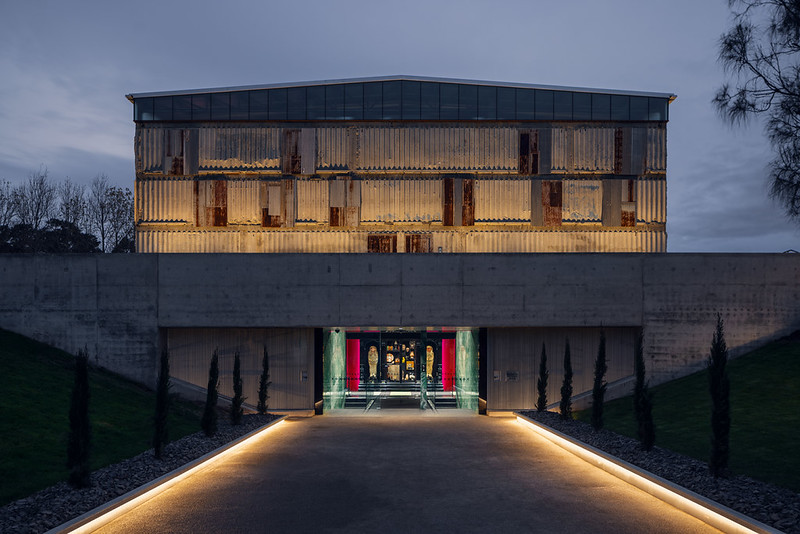
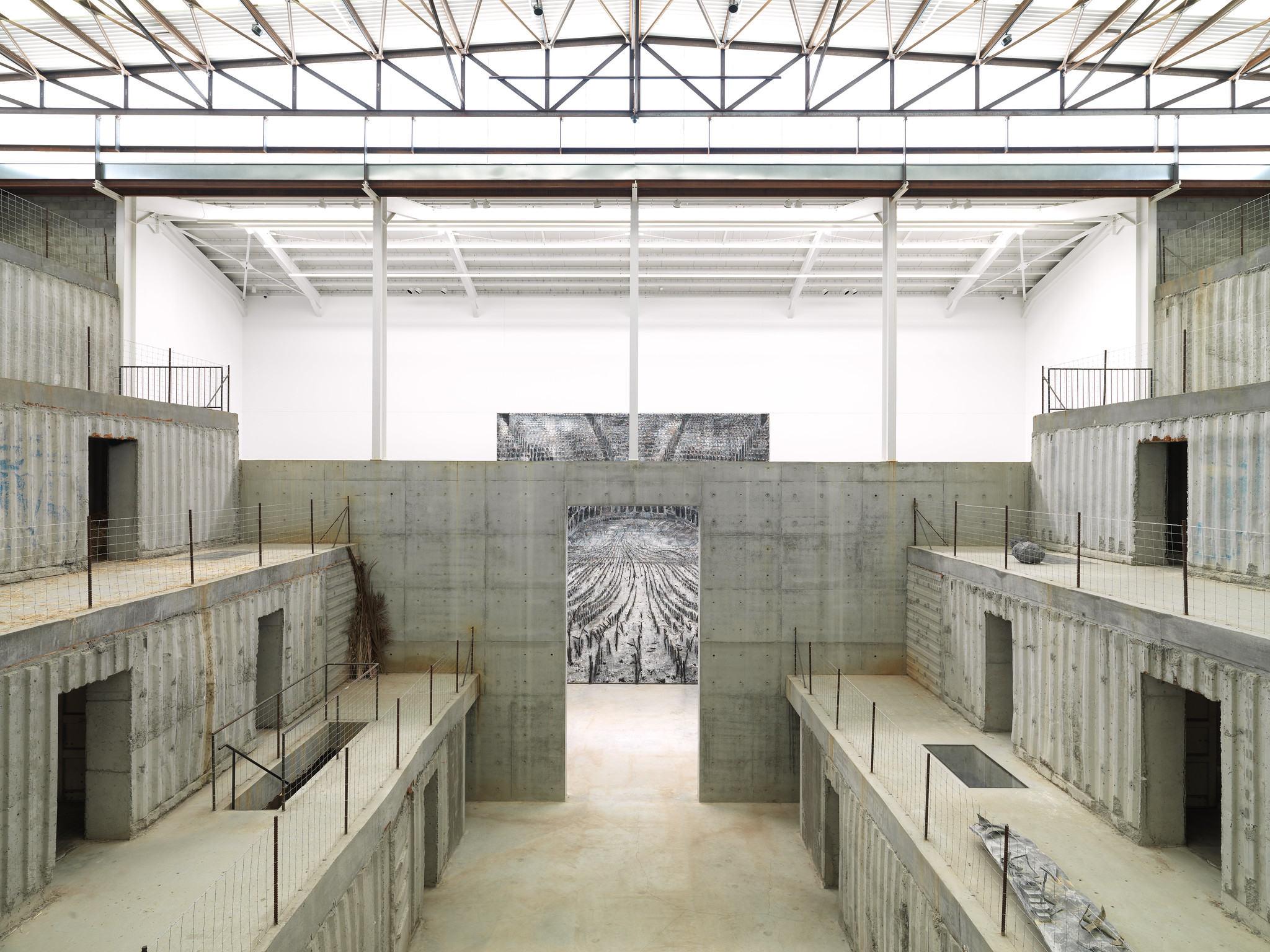
The subterranean network connects MONA’s main gallery with Elektra, Breathe, Phrontisterion, which occupies the negative space beneath Elektra and the Round House, creating new connections between art, architecture and MONA’s distinctive geological setting.
A defining element of the architectural vision was to retain and expose the natural rock wherever possible. The unusually shaped, interconnected tunnels feature exposed, multi-hued raw rock, while exposed rock also forms the walls of the library and adjacent galleries.
Delivering that vision required careful geotechnical engineering to achieve the required stability and safety while minimising visible structural support.
Engineering MONA’s architectural vision
Douglas Partners worked closely with the project team to help safely translate MONA’s architectural concepts into buildable underground spaces.
Our work included geotechnical input into tunnel and excavation support, open-cut stability, construction inspections and assessment of exposed rock conditions.
A key objective was to preserve the raw appearance of the rock surfaces. Rock support was therefore designed to be used judiciously, with a minimum number of strategically positioned rock bolts incorporating exposed MONA Crosses, together with hidden dowels where appropriate.
This approach helped maintain the architectural intent while providing the rock support required for safe and stable underground spaces.

Elektra, 2025, Anselm Kiefer (detail)
Shipping containers, cast concrete, steel, glass, plant materials, lead, terracotta, plaster, fabric, emulsion, shellac, razor wire, photographs, water.
© Anselm Kiefer.
Photo Credit: Mona/Jesse Hunniford
Image courtesy of the artist and Mona (Museum of Old and New Art), Hobart, Tasmania, Australia
Geotechnical solutions for Breathe
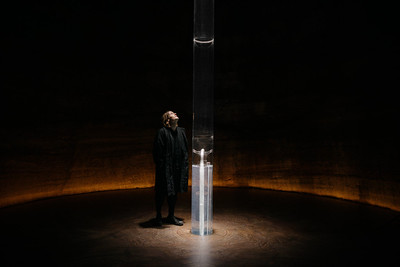
The Breathe installation is one of the development’s most unusual spaces. It allows visitors to breathe oxygen released from 2.4-billion-year-old banded iron formation sourced from the Kimberleys.
Geotechnical investigations by Douglas Partners identified opportunities to improve the original design and construction approach. Following the investigation, Douglas Partners recommended changing the proposed location of Breathe and its construction methodology, resulting in significant cost savings.
Douglas Partners also recommended modifications to the entrance to the Breathe plant room to improve the safety of its intersection with the Breathe installation tunnel.
These recommendations demonstrate the value of involving geotechnical specialists not only to manage ground risk, but also to identify opportunities to improve constructability, safety and project efficiency.

Breathe, Julian Charrière, 2026
Photo Credit: Mona/Jesse Hunniford
Image Courtesy the Museum of Old and New Art, Hobart, Tasmania, Australia
Supporting construction through responsive geotechnical inspections
Douglas Partners continued to provide geotechnical support throughout construction, including inspections and assessments of excavation hold points.
Virtual inspections were used regularly for excavation hold points, including at every three-metre advance of the roadheader during tunnel excavation. This approach reduced the need for repeated travel while allowing the project team to maintain regular geotechnical oversight of changing ground conditions.
The inspections identified locations where additional rock bolts were required, with site inspections undertaken approximately every three to six months to review exposed conditions and confirm the ongoing performance of the excavations.
This combination of remote and on-site geotechnical assessment provided a practical approach to managing ground conditions throughout construction while supporting project safety and efficiency.

Rouge Battery, 2014, Matthew Barney, Phrontisterion
Cast copper and iron
Photo Credit: Mona/Jesse Hunniford
Copyright the artist. Image Courtesy the Museum of Old and New Art, Hobart, Tasmania, Australia
Bringing the geology into the visitor experience
At MONA, the geology is more than a constraint to be engineered around – it forms part of the architecture and visitor experience.
Douglas Partners is also preparing a series of geological storyboards explaining features visible within the exposed rock walls, helping visitors understand the ancient geology surrounding the artworks and underground spaces.
The project demonstrates how geotechnical engineering and rock mechanics can support ambitious architectural design while balancing safety, constructability, cost and the preservation of natural geological features.
For complex underground developments, Douglas Partners combines detailed ground knowledge with practical geotechnical and rock engineering solutions to help clients turn challenging concepts into safe, buildable outcomes.


